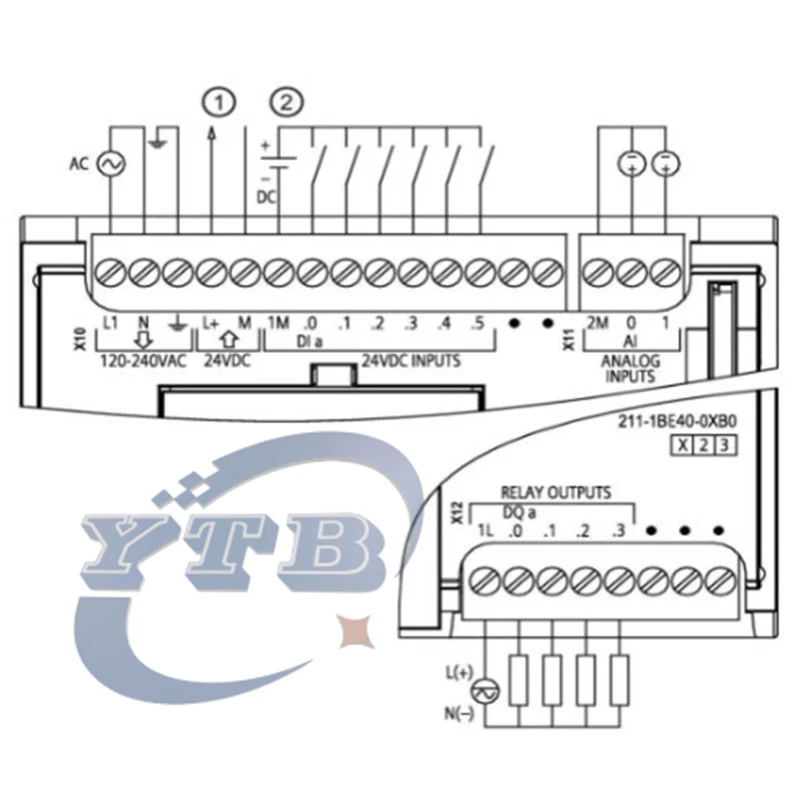

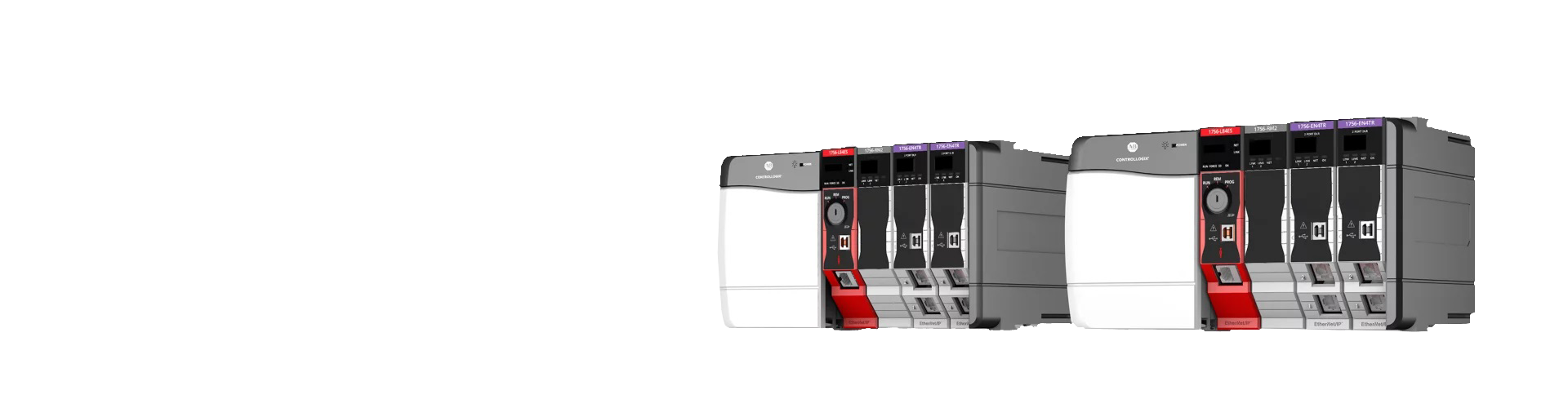
The CPU serves as the core control unit of the PLC, responsible for executing user programs, processing input signals, computing control logic, and generating output signals. CPU performance directly impacts the PLC's scan speed and processing capabilities; different CPU models support varying scales of I/O points and levels of program complexity.
Input/Output (I/O) modules include digital input, digital output, analog input, and analog output modules. These modules connect field sensors and actuators to facilitate signal acquisition and output, acting as the bridge between the PLC and industrial field equipment.
Communication modules-such as Profibus, Profinet, or Industrial Ethernet modules-enable data exchange between the PLC and supervisory control systems, other PLCs, or HMIs. These modules ensure system interconnectivity and real-time data transmission.
Auxiliary modules and power supply modules. The power supply module provides stable DC power to the PLC, ensuring the proper operation of the CPU and I/O modules. Auxiliary modules-including those for interface expansion, signal isolation, and relay expansion-enhance system functionality and protection capabilities, making the PLC system more reliable and flexible.